

High Protein Breakfast Ideas for Steady Energy and Fewer Cravings
Table of Contents
Do you find yourself reaching for a snack just a couple of hours after breakfast — or struggling with an energy slump later in the day? Your breakfast may be worth a closer look.
A meal built around protein, fiber, and nutrient-rich foods can be more satisfying than a breakfast made mostly from refined carbohydrates. For many women, starting the day with enough protein can make it easier to stay full, support muscle health, and maintain a balanced eating pattern throughout the day.
That doesn’t mean carbohydrates are bad, or that breakfast needs to be complicated. It simply means that adding a good source of protein can make your morning meal more satisfying and nutritionally balanced.
If you’re looking for practical high protein breakfast ideas , here are eight easy options to try — along with simple tips for building a breakfast that keeps you nourished and satisfied.
What Makes a Breakfast High in Protein?
A high-protein breakfast doesn’t have to involve protein powder, complicated recipes, or large portions of meat.
The simplest approach is to start with a clear protein source, then add fiber-rich carbohydrates, fruits or vegetables, and healthy fats as appropriate.
Good breakfast protein sources include:
- Eggs and egg whites
- Greek yogurt
- Cottage cheese
- Milk or fortified soy milk
- Tofu and tempeh
- Beans and lentils
- Nut and seed butters
- Protein powder, if convenient
The goal isn’t to eliminate carbohydrates or fat. It’s to build a balanced meal that provides protein along with other nutrients your body needs.
Why Protein Matters So Much at Breakfast
Protein is an essential nutrient involved in muscle maintenance, tissue repair, immune function, and many other processes in the body. It also tends to be filling, which is one reason protein-rich meals can help support feelings of fullness.
A breakfast that combines protein with fiber-rich carbohydrates and healthy fats provides a more balanced nutritional foundation for the day.
Compare, for example:
- Toast with jam
- Whole-grain toast + eggs + avocado + berries
The second option provides protein, fiber, healthy fats, and a broader range of nutrients.
That’s the goal of a high-protein breakfast — not eliminating carbohydrates, but building a morning meal that is both satisfying and nutritionally balanced.
How Much Protein Should You Eat at Breakfast?
There is no single protein target that is right for every woman. Your needs depend on factors such as body size, age, activity level, total daily protein intake, and individual health goals.
That said, around 20–30 grams of protein at breakfast can be a practical target for many adults, particularly if you’re trying to make breakfast more filling or support muscle maintenance.
You don’t have to hit an exact number every morning. Think of this as a useful range rather than a strict rule.
For women who are older, highly active, or specifically focused on maintaining muscle, overall daily protein intake may matter more than reaching a particular number at breakfast.
8 High-Protein Breakfast Ideas to Try This Week
1. Greek Yogurt Parfait With Berries and Nuts
Greek yogurt is one of the easiest ways to add protein to breakfast without much preparation.
Layer plain Greek yogurt with fresh or frozen berries, chopped almonds or walnuts, and chia or flax seeds. Depending on the yogurt and portion size, this can provide roughly 20–25 grams of protein.
For a less sweet option, skip the honey and add cinnamon instead.
Approx. protein: 20–25 g
Varies by brand and portion size.
2. Eggs and Veggie Breakfast Bowl
Eggs are versatile, affordable, and easy to combine with vegetables.
Try two eggs with sautéed spinach, mushrooms, bell peppers, and tomatoes. Add whole-grain toast or a small serving of potatoes for carbohydrates, and avocado for healthy fats.
For extra protein, add egg whites or a side of Greek yogurt.
Approx. protein: 15–25 g
Depends on the number of eggs and additional protein sources.
3. Cottage Cheese With Fruit and Seeds
Cottage cheese can be an excellent high-protein breakfast base.
Combine it with berries or sliced peaches, chia or pumpkin seeds, and a pinch of cinnamon. A half-cup serving often provides around 12–15 grams of protein, depending on the product.
For a savory option, try cottage cheese with tomatoes, cucumber, fresh herbs, and whole-grain crackers.
Approx. protein: 12–20 g
Higher when paired with additional protein-rich foods.
4. High-Protein Smoothie
A smoothie can be one of the quickest high protein breakfast ideas for a busy morning.
Blend milk or fortified soy milk, Greek yogurt or protein powder, frozen berries, spinach, and chia or flax seeds.
Choose your protein source first, then build the smoothie around it. If you’re using protein powder, check the nutrition label because protein content varies considerably between products.
Approx. protein: 20–30 g
Depends on the milk, yogurt, and protein powder used.
5. Protein Overnight Oats
Overnight oats are ideal when mornings are hectic.
Combine rolled oats, milk or fortified soy milk, Greek yogurt or protein powder, chia seeds, and berries or sliced banana.
Prepare the jar the night before and refrigerate.
The combination of protein and fiber can make overnight oats more filling than a bowl of oatmeal made with little or no added protein.
Approx. protein: 20–30 g
Depends on the ingredients and portions.
6. Avocado Toast With Eggs
Avocado toast doesn’t have to be low in protein.
Start with whole-grain toast, then add two eggs, mashed avocado, tomato, and your favorite herbs or seasoning.
The eggs provide protein, while avocado contributes healthy fats and fiber. For an even higher-protein meal, pair it with a side of Greek yogurt or cottage cheese.
Approx. protein: 15–25 g
Depends on bread, egg quantity, and additional protein sources.
7. Tofu Scramble
If you prefer plant-based breakfasts, tofu is a versatile protein source.
Crumble firm tofu into a pan and cook it with spinach, mushrooms, peppers, tomatoes, turmeric, garlic, and nutritional yeast.
Serve with whole-grain toast or roasted potatoes.
Rotating plant-based protein sources such as tofu, tempeh, beans, and lentils can add variety to your overall diet.
Approx. protein: 18–25 g
Depends on tofu quantity and additional ingredients.
8. Protein Pancakes With Nut Butter
You don’t have to give up pancakes for a protein-rich breakfast.
Make them with oats, eggs, Greek yogurt or cottage cheese, and cinnamon. Add protein powder if you want an additional protein boost.
Top with natural peanut or almond butter and fresh fruit rather than large amounts of syrup.
You can still enjoy a satisfying breakfast while keeping protein and other nutrients in the meal.
Approx. protein: 20–30 g
Depends on the recipe and portion size.
How to Build Your Own High-Protein Breakfast
You don’t need a recipe every morning.
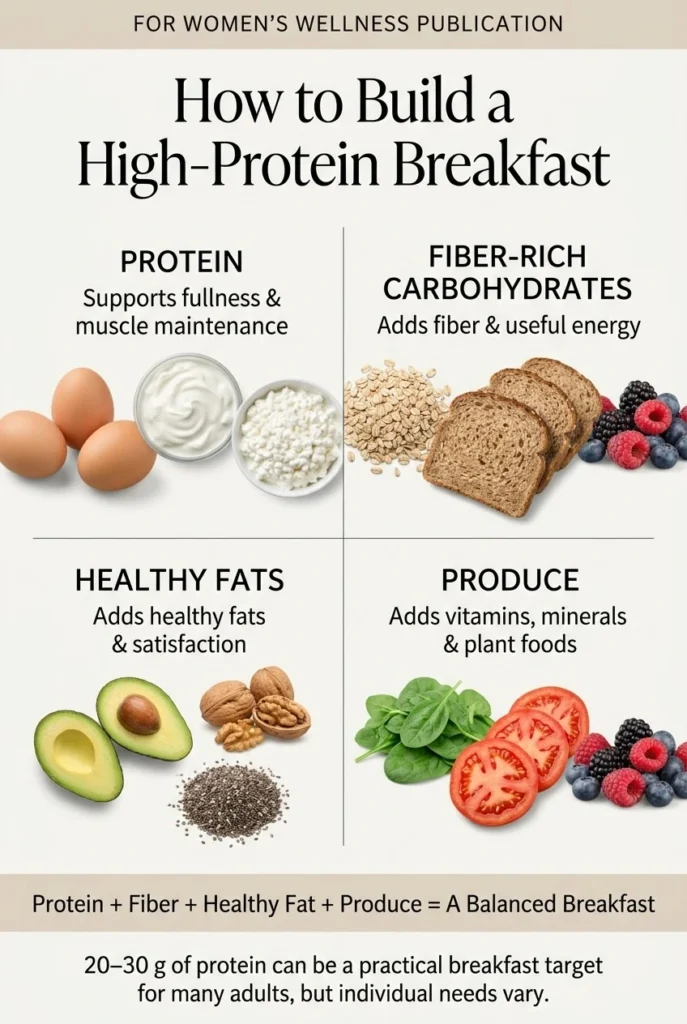
Use this simple formula:
Protein + Fiber + Healthy Fat + Produce
Protein
Eggs, Greek yogurt, cottage cheese, tofu, tempeh, beans, milk, soy milk, or protein powder.
Fiber-rich carbohydrates
Oats, whole-grain bread, fruit, berries, beans, or vegetables.
Healthy fats
Avocado, nuts, seeds, nut butter, or olive oil.
Produce
Fruit or vegetables whenever possible.
For example:
Greek yogurt + berries + chia seeds + walnuts
Eggs + whole-grain toast + avocado + tomatoes
Tofu + vegetables + whole-grain toast
Simple combinations can be just as practical as elaborate recipes.
Easy Meal-Prep Strategies for Busy Mornings
The healthiest breakfast isn’t very useful if you never have time to make it.
A little preparation can make high-protein mornings much easier:
- Prepare eggs in advance: Batch-cook egg muffins with vegetables and refrigerate them for quick breakfasts.
- Prepare overnight oats: Make three or four portions at once so breakfast is ready when you wake up.
- Portion yogurt and toppings: Keep individual servings of Greek yogurt ready with berries, seeds, or nuts.
- Keep smoothie ingredients frozen: Pre-portion berries and spinach into freezer bags, then add your protein source and liquid when ready to blend.
- Keep emergency options on hand: Greek yogurt, cottage cheese, boiled eggs, or a quick smoothie can make busy mornings easier.
High-Protein Breakfast Ideas Without Eggs or Dairy
You don’t need eggs, milk, or yogurt to eat a protein-rich breakfast.
Try:
- Tofu scramble
- Tempeh with whole-grain toast
- Overnight oats made with fortified soy milk and chia seeds
- A plant-based protein smoothie
- Peanut butter and banana overnight oats
- Whole-grain toast with hummus and tofu
- Soy-based yogurt with berries and seeds
If you follow a fully plant-based diet, eating a variety of protein-rich foods throughout the day can help you meet your overall nutritional needs.
Can a High-Protein Breakfast Help With Afternoon Fatigue?
It may help — but breakfast isn’t the only factor that determines your energy level.
A protein-rich, balanced breakfast may improve satiety and help some people avoid becoming excessively hungry later in the morning. Having enough food overall, along with fiber-rich carbohydrates and other nutrient-dense foods, can also contribute to a balanced eating pattern.
However, persistent afternoon fatigue can have many possible causes, including:
- Insufficient sleep
- Stress
- Dehydration
- Inadequate overall food intake
- Certain medications
- Low physical activity
- An underlying health issue
If you’re consistently exhausted despite getting enough sleep and eating well, don’t assume you simply need more protein. Persistent or unexplained fatigue is worth discussing with a healthcare professional.
Does a High-Protein Breakfast Help With Weight Management?
A protein-rich breakfast may help some people feel fuller and reduce the urge to snack later.
However, weight management is influenced by many factors, including total energy intake, physical activity, sleep, genetics, medications, and overall eating patterns.
There is no single breakfast that causes weight loss.
Instead of asking, “Which breakfast burns the most fat?”, a more useful question is:
“Which breakfast keeps me satisfied, nourished, and consistent with my overall eating pattern?”
That shift can make healthy eating more sustainable.
Frequently Asked Questions
What is the fastest high-protein breakfast to prepare?
Greek yogurt with berries and nuts can take less than five minutes to assemble. A protein smoothie is another quick option if you already have the ingredients available.
Can I eat a high-protein breakfast without eggs?
Absolutely. Greek yogurt, cottage cheese, tofu, tempeh, soy milk, protein powder, and beans can all provide protein without eggs.
Are carbohydrates bad at breakfast?
No. Carbohydrates can be an important source of energy and nutrients.
Instead of eliminating them, consider choosing higher-fiber carbohydrate sources and combining them with protein and other nutrient-rich foods.
Is it okay to eat the same high-protein breakfast every day?
Yes, if you enjoy it and it fits your nutritional needs.
That said, eating a variety of foods throughout the week can help broaden your overall nutrient intake and make your diet more enjoyable.
Will a high-protein breakfast definitely stop my afternoon energy crash?
Not necessarily.
A balanced breakfast may help with satiety and energy for some people, but afternoon fatigue has many possible causes and shouldn’t automatically be attributed to breakfast alone.
Do I need protein powder to hit my protein target at breakfast?
No.
Whole foods such as eggs, Greek yogurt, cottage cheese, tofu, and soy milk can provide substantial amounts of protein without supplements.
Protein powder is simply a convenient option, not a requirement.
How do I know if my breakfast has enough protein?
Checking nutrition labels for packaged foods, or roughly estimating from familiar foods, can help.
For example, one large egg provides approximately 6 grams of protein, while a serving of Greek yogurt may provide around 15–20 grams or more, depending on the product.
If you’re aiming for around 20–30 grams at breakfast, combining two or more protein sources can make that target easier to reach.
A Note on Individual Protein Needs
Protein needs vary from person to person.
Age, body size, physical activity, pregnancy or breastfeeding, dietary pattern, and overall health can all influence how much protein you need.
If you’re increasing your protein intake because of a specific health, fitness, or dietary goal, a registered dietitian or healthcare professional can help you determine an appropriate target.
Final Thoughts
The best high protein breakfast ideas don’t need to be complicated.
Start with a reliable protein source, add fiber-rich carbohydrates, include fruit or vegetables, and finish with a source of healthy fat when appropriate.
Whether it’s Greek yogurt with berries, eggs and avocado toast, overnight oats, or a tofu scramble, the goal is the same: build a breakfast that leaves you nourished, satisfied, and ready for the day.
And if you’re regularly experiencing a serious afternoon energy crash, look beyond breakfast too.
Sleep, hydration, stress, physical activity, overall nutrition, and general health all play a role in how you feel throughout the day.
A better breakfast can be one useful piece of the puzzle — not the whole solution.
—
Disclaimer: This article is for general educational purposes only and is not a substitute for individualized medical or nutritional advice. Protein needs vary from person to person. If you have kidney disease, a digestive disorder, a diagnosed medical condition, are pregnant or breastfeeding, or have specific dietary requirements, consult a qualified healthcare professional or registered dietitian for personalized guidance.