Strength Training for Women Over 30: Why It Matters for Your Long-Term Health
Table of Contents
If cardio has always been your go-to workout, there is another type of exercise worth making a regular part of your routine: strength training.
Strength training for women over 30 isn’t simply about building bigger muscles or changing the way your body looks. It can help women maintain muscle strength, support bone health, improve physical function, and stay active and independent as they get older.
And you don’t need to become a serious weightlifter to benefit.
Whether you’re completely new to resistance training or you’ve exercised for years, building strength is one of the most practical investments you can make in your long-term health.
What Changes in Your Body After 30?
Turning 30 doesn’t suddenly change your body overnight. There is no biological switch that flips on your 30th birthday.
However, as we move through adulthood, several gradual changes can affect muscle mass, bone health, body composition, recovery, and physical performance.
Muscle Mass and Strength Can Decline With Age
Without regular resistance exercise, adults tend to lose muscle mass and strength as they age. The rate varies considerably from person to person and is influenced by physical activity, nutrition, genetics, illness, and other factors.
This is one reason strength training becomes increasingly valuable over the long term.
The goal isn’t simply to build muscle today.
It’s to maintain enough strength to move well years from now.
Bone Health Becomes Increasingly Important
Bones are living tissue and respond to mechanical loading.
Weight-bearing activity and resistance exercise can support bone health, which becomes particularly important for women as they approach and move through menopause, when changes in estrogen levels can contribute to accelerated bone loss in some women.
Building strong habits earlier in adulthood can therefore be part of a long-term approach to skeletal health.
Body Composition Can Change
Age-related changes in muscle mass, physical activity, hormones, nutrition, sleep, and other factors can influence body composition.
This is one reason why the scale alone isn’t always the best measure of health.
Maintaining muscle and physical strength can be much more meaningful than simply trying to weigh less.
The Benefits of Strength Training for Women Over 30
1. Stronger Muscles for Everyday Life
Strength isn’t just about lifting weights.
It’s about being able to carry groceries, climb stairs, lift a suitcase, get up from the floor, play with your children, or perform everyday tasks without feeling physically limited.
Resistance training can improve muscular strength and physical function, making daily activities easier and helping you maintain independence as you age.
2. Support for Bone Health
Resistance exercise places mechanical stress on the skeleton, encouraging the body to maintain bone tissue.
For women, this is especially relevant because bone loss can accelerate during the menopausal transition.
Strength training shouldn’t be considered a replacement for medical treatment when osteoporosis or significant bone loss is present, but it can be an important component of an overall bone-health strategy.
3. Better Metabolic Health
Muscle tissue plays an important role in glucose metabolism.
Regular resistance training can improve muscular fitness and insulin sensitivity and can be particularly useful when combined with aerobic activity and a balanced diet.
Rather than thinking about strength training as a way to “speed up your metabolism,” it is more accurate to think of it as a way to support muscle, metabolic health, and healthy body composition.
4. Better Mental Well-Being
Exercise is associated with benefits for mental health and overall well-being.
Strength training may help some women feel more capable, confident, and physically resilient. It can also provide a structured way to manage stress and create a sense of progress.
The psychological benefit isn’t necessarily about lifting heavier weights.
Sometimes, it’s simply realizing:
“My body can do more than I thought.”
5. Long-Term Mobility and Independence
Perhaps the most important benefit has little to do with appearance.
Strength is closely connected to physical function.
Maintaining strength throughout adulthood can help support mobility and independence later in life.
Being strong at 35, 45, or 55 isn’t just about today.
It’s about giving your future self more physical capacity to work with.
How Much Strength Training Do Women Over 30 Need?
You don’t need to spend hours in the gym.
For general health, adults are commonly advised to include muscle-strengthening activities involving the major muscle groups on at least two days per week.
That can include:
- Free weights
- Weight machines
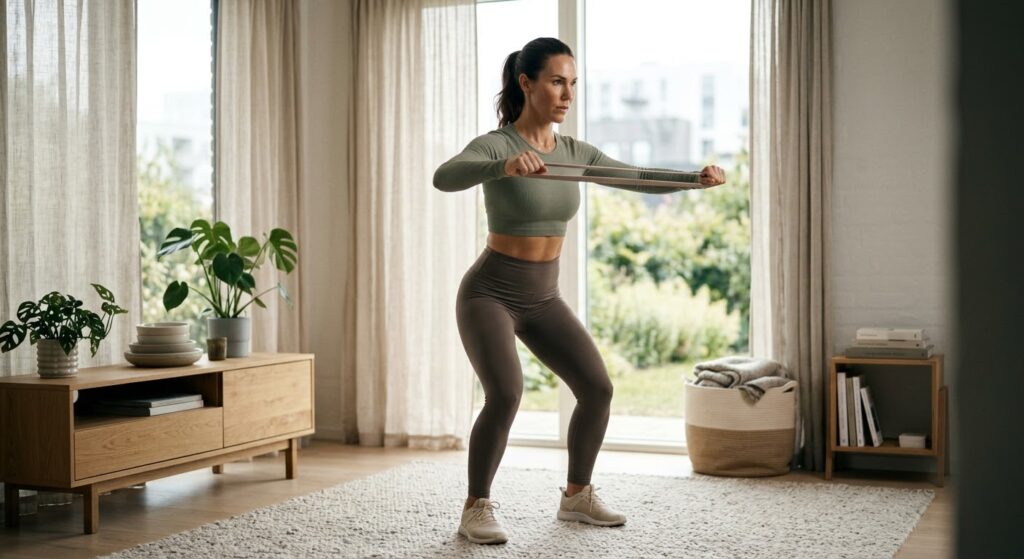
- Resistance bands
- Bodyweight exercises
- Other forms of resistance training
The important factor is that the exercises provide enough resistance to challenge the muscles.
If you’re new to strength training, starting with two sessions per week is a practical and sustainable option.
How to Start Strength Training as a Beginner
Start With Two Full-Body Sessions Per Week
You don’t need a complicated split routine.
A simple full-body workout can include exercises that train:
- Legs
- Hips
- Back
- Chest
- Shoulders
- Arms
- Core
Start with manageable resistance and focus on learning the movement correctly.
Begin With Basic Movement Patterns
A beginner-friendly routine might include:
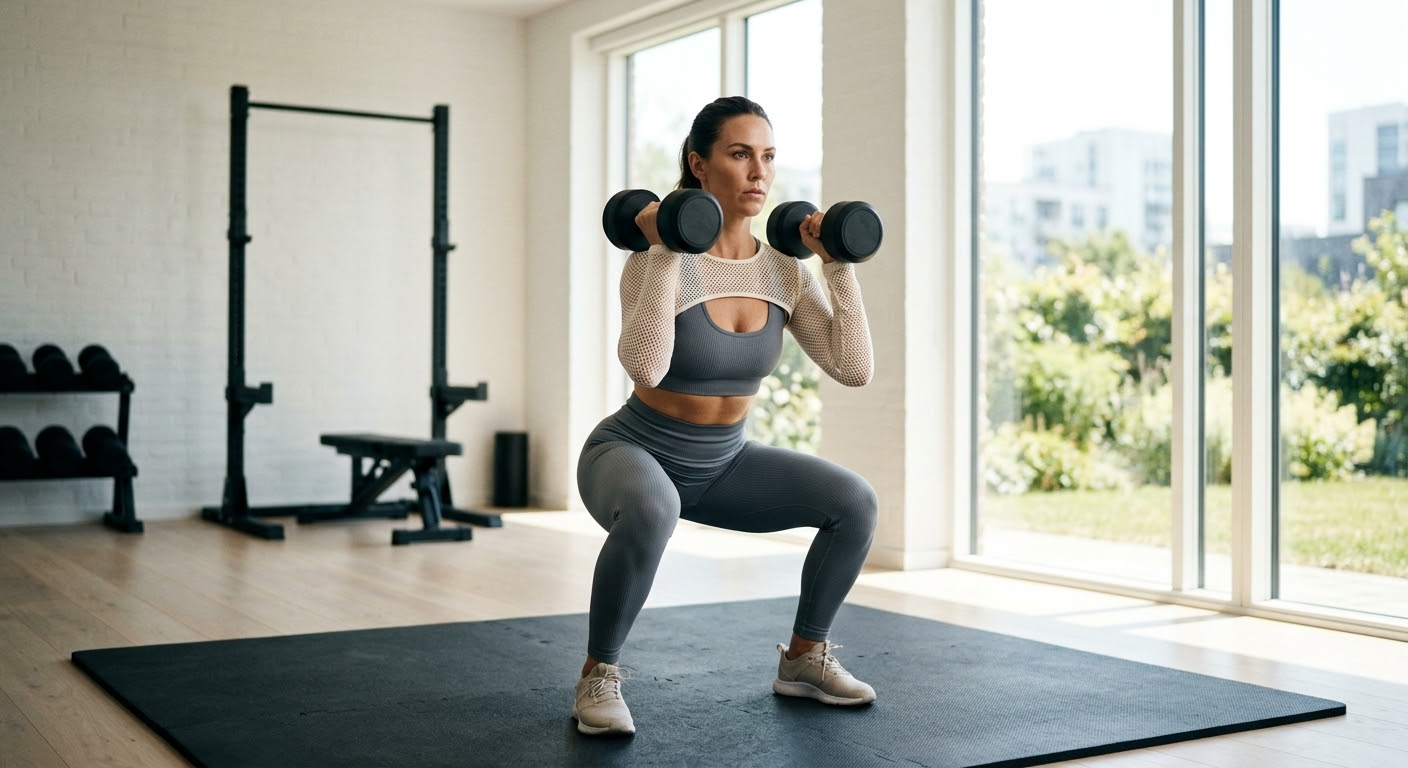
Squat: chair squats or bodyweight squats
Hip hinge: a light Romanian deadlift or hip-hinge exercise
Push: wall push-ups or incline push-ups
Pull: resistance-band rows
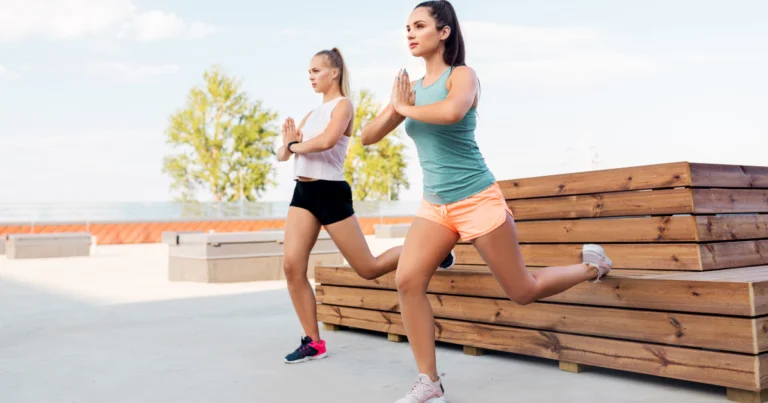
Lunge: supported split squats or reverse lunges
Carry: carrying a pair of moderately challenging weights
You don’t need to perform every exercise in your first workout.
Start gradually and build from there.
Prioritize Technique
Good technique matters more than lifting impressive amounts of weight.
If you’re unsure how to perform an exercise, consider working with a qualified fitness professional or using reliable instructional resources.
If an exercise causes sharp or persistent pain, stop and seek appropriate advice rather than trying to push through it.
Use Progressive Overload
Your body adapts when it is consistently challenged.
Once an exercise becomes comfortable, you can gradually increase the challenge by adding:
– A little more weight
– Additional repetitions
– Another set
– More challenging variations
– Better control of the movement
This gradual progression is known as progressive overload.
You don’t need to increase everything at once.
Give Your Body Time to Recover
More training isn’t always better.
Your muscles need time to recover and adapt between challenging sessions.
Adequate sleep, sufficient nutrition, hydration, and rest days all contribute to recovery.
And remember: consistency over months and years matters much more than a few extremely hard workouts.
Do Women Need to Lift Heavy Weights?
Not necessarily.
“Heavy” is relative to your current strength level.
A resistance that feels challenging for one woman may be easy for another.
The goal is to use enough resistance to make the muscles work while maintaining good technique.
As you become stronger, gradually increasing the challenge can help you continue progressing.
Common Strength Training Myths for Women
“Lifting Weights Will Make Me Bulky”
Significant muscle growth requires consistent resistance training, adequate nutrition, and time.
For most women beginning a general strength program, the more noticeable changes are likely to involve improved strength, physical function, and body composition rather than suddenly becoming “bulky.”
“I’m Too Old to Start”
You are not.
People can improve strength and physical function at many different ages.
Starting earlier gives you more years to build and maintain physical capacity, but starting later can still provide meaningful benefits.
“Cardio Is Enough”
Cardiovascular exercise is extremely valuable.
It supports heart and lung fitness and is an important part of a healthy lifestyle.
But cardio and resistance training provide different adaptations.
The strongest approach for overall fitness is usually not cardio versus strength training.
It’s cardio plus strength training.
“I Need a Gym”
You don’t.
Resistance bands, dumbbells, machines, and bodyweight exercises can all be useful.
The best program is often the one you can perform consistently.
Strength Training and Women’s Health After 40
Strength training becomes particularly relevant as women move through midlife.
The menopausal transition can involve changes in estrogen levels, body composition, muscle mass, sleep, and bone health.
But strength training shouldn’t be viewed as a way to “balance hormones.”
Its value is broader.
It can help women maintain muscle and strength, support bone health, improve physical function, and remain active during a period of significant biological change.
For women experiencing persistent symptoms during perimenopause or menopause, exercise can be part of a broader health strategy—but it should not replace appropriate medical evaluation or treatment when needed.
When Should You Get Professional Advice?
Strength training is appropriate for many healthy adults, but some people should seek professional guidance before starting or significantly changing an exercise program.
Consider speaking with a healthcare professional or qualified exercise professional if you:
- Have a significant medical condition
- Have recently undergone surgery or experienced a serious injury
- Have severe or unexplained pain
- Have known osteoporosis or a history of fragility fractures
- Have been inactive for a long period and plan to begin vigorous exercise
- Are unsure which exercises are appropriate for your situation
- Personalized guidance can help you train safely and choose exercises that match your current abilities.
Making Strength Training a Lifelong Habit
The women who benefit most from strength training aren’t necessarily those who have the most sophisticated workout programs.
- They’re often the ones who keep showing up.
- Start with two sessions a week.
- Keep your workouts simple.
- Track your progress.
- Increase the challenge gradually.
- And don’t worry if some weeks are less productive than others.
- A sustainable routine that you follow for years will almost always be more valuable than an intense program that you abandon after a month.
Final Thoughts
Strength training for women over 30 isn’t about fighting your age or chasing a particular body shape.
It’s about building and maintaining the physical capacity that allows you to live well.
Stronger muscles can make everyday activities easier. Resistance exercise can support bone health and physical function. Maintaining muscle can also contribute to metabolic health and healthy body composition.
And perhaps most importantly, strength gives you something that becomes increasingly valuable with age:
physical independence.
- You don’t have to start with heavy weights.
- You don’t need a perfect workout.
- You simply need to start at a level that feels appropriate for you and gradually build from there.
Your future self will thank you.
——————————————————————————————
Disclaimer: This article is for general educational purposes only and is not a substitute for individualized medical or fitness advice. If you have a medical condition, injury, osteoporosis, or other concerns about starting an exercise program, consult an appropriate healthcare professional before beginning